Most household appliances work quietly in the background until something suddenly goes wrong. The washing machine stops draining, the oven takes twice as long to heat, or the fridge begins making a noise you have never heard before.
Some problems are minor. Others are early warning signs that a component is beginning to fail.
The difficulty for homeowners is knowing which is which.
Continuing to use a faulty appliance can sometimes turn a relatively straightforward repair into a more expensive problem. It can also leave you without an appliance just when you need it most.
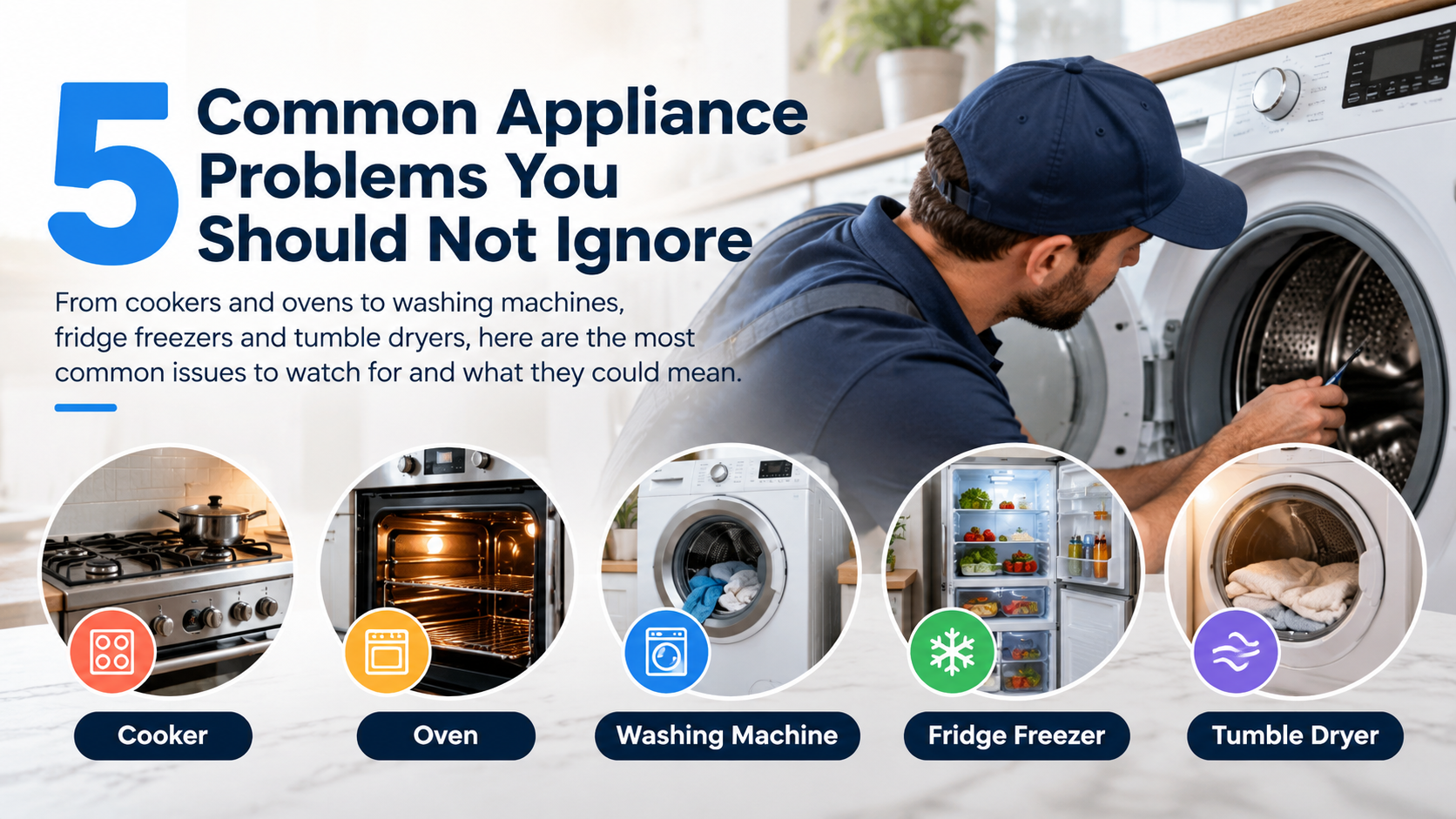
Here are five common appliance problems worth paying attention to, along with some practical guidance on what may be causing them.
1. Your cooker is no longer heating properly
A cooker that heats unevenly can make everyday cooking frustrating. Food may take longer than expected, one part of the hob may work while another does not, or the appliance may fail to reach the temperature you have selected.
There are several possible reasons.
A heating element may be failing
Electric cookers rely on heating elements to generate the heat needed for cooking. Over time, these elements can wear out.
You may notice that one ring heats slowly, fails completely, or produces inconsistent heat.
The thermostat may not be reading the temperature correctly
The thermostat controls the temperature inside the appliance. If it develops a fault, the cooker may become too hot, remain too cool, or repeatedly switch its heating cycle on and off.
There may be an electrical problem
If your cooker keeps tripping the electrics, switching itself off or failing to power on, the issue may be electrical rather than mechanical.
Repeatedly resetting the appliance without finding the cause is rarely a good long-term solution.
Professional cooker repairs can help determine whether the problem is coming from an element, thermostat, wiring, control switch or another internal component.
2. Your oven takes too long to heat
Many people only realise something is wrong with their oven when familiar recipes suddenly start taking much longer.
If an oven previously reached the required temperature quickly but now struggles to do so, it is worth investigating.
The oven element could be damaged
A failing heating element is one of the more common reasons an electric oven stops heating correctly.
Sometimes an element fails completely. In other cases, it continues producing some heat but is no longer operating efficiently.
The temperature sensor may be inaccurate
The temperature displayed on the control panel is not always the temperature being produced inside the oven.
A faulty sensor or thermostat can result in undercooked food, overcooking or inconsistent results.
The oven door may not be sealing correctly
Heat can escape through a damaged seal or poorly closing oven door.
This forces the appliance to work harder to maintain temperature and can noticeably increase cooking times.
If the problem continues after basic checks, arranging oven repairs can help identify the actual fault rather than replacing individual components unnecessarily.
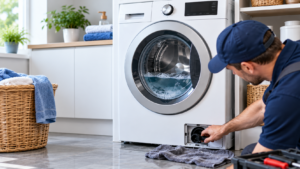
3. Your washing machine will not drain or spin
A washing machine completing its cycle with water still inside the drum is one of the most inconvenient appliance problems.
Fortunately, the cause is not always serious.
Start by checking the filter
Coins, buttons, fabric fibres and other small objects can find their way into the washing machine filter.
A heavily blocked filter can prevent water from draining properly.
Always follow the manufacturer’s instructions before removing or cleaning a filter, particularly if there is still water inside the machine.
Check the drainage hose
A bent or blocked drainage hose may also prevent water from leaving the machine.
Make sure the hose has not become trapped behind the appliance.
The drainage pump could have failed
If the filter and hose appear clear but the machine still does not drain, the problem may involve the pump.
You might also notice unusual humming or grinding noises during the drainage stage.
Another warning sign is a washing machine that drains but refuses to spin. This could point to issues involving the motor, belt, door lock mechanism or electronic controls.
When straightforward checks do not solve the issue, washing machine repairs can help determine whether a component needs adjusting, repairing or replacing.
4. Your fridge freezer is struggling to stay cold
Temperature problems inside a fridge freezer should not be ignored.
A fridge that feels warmer than normal can affect food storage, while excessive ice inside the freezer may indicate that the appliance is no longer regulating temperature correctly.
Check the temperature setting first
Before assuming there is a mechanical fault, check that the temperature control has not accidentally been changed.
It is also worth checking whether food or containers are blocking internal air vents.
Look at the door seals
Damaged or dirty seals can allow warm air into the appliance.
A door that does not close tightly forces the fridge freezer to work harder to maintain its internal temperature.
Listen for unusual sounds
Fridge freezers naturally make some noise, but clicking, repeated buzzing or unusually loud operation can indicate that a component is struggling.
Problems involving fans, thermostats, sensors or the cooling system generally require further diagnosis.
Timely fridge freezer repairs may prevent a developing fault from becoming a complete breakdown, particularly when the appliance is still cooling but clearly performing differently from normal.
5. Your tumble dryer runs but clothes remain wet
A tumble dryer that spins normally but leaves clothes damp can be particularly confusing. The appliance appears to be working, yet the drying performance has noticeably changed.
Several issues can contribute to this.
The filter may need cleaning
Restricted airflow makes it harder for the dryer to remove moisture from clothes.
Cleaning the lint filter regularly is one of the simplest ways to help the appliance operate effectively.
Airflow may be restricted elsewhere
Depending on the type of dryer, vents, condenser units or other airflow components may also need attention.
Always follow the manufacturer’s recommended cleaning procedure.
The heating system may have developed a fault
If the drum turns but there is little or no heat, the problem could involve a heating element, thermostat, thermal fuse or sensor.
Continuing to run repeated drying cycles will not normally solve an underlying component problem.
A professional tumble dryer repair can identify whether poor drying performance is being caused by airflow, heating, sensing or another internal fault.
When should you stop using a faulty appliance?
Not every unusual noise means an appliance is about to fail, but certain symptoms should not be ignored.
Consider switching the appliance off and arranging an inspection if you notice:
- Burning smells
- Sparks
- Repeated electrical tripping
- Water leaking near electrical components
- Excessive overheating
- Loud grinding or banging noises
- Smoke
- A significant and sudden change in performance
Electrical appliances contain components that should only be inspected or repaired by someone with the appropriate knowledge.
Trying to dismantle an appliance without understanding the electrical system can create additional damage and unnecessary safety risks.
Repair or replace the appliance?
A fault does not automatically mean an appliance needs replacing.
The right decision normally depends on several factors, including the age of the appliance, the nature of the fault, availability of replacement parts and the overall condition of the machine.
For example, replacing a relatively inexpensive component in an otherwise reliable appliance can make far more sense than buying a new machine.
On the other hand, an older appliance experiencing several major faults within a short period may no longer be economical to keep repairing.
Getting the fault properly diagnosed first gives you better information before making that decision.
Small problems are easier to deal with early
Most appliances give some indication that something is changing before they stop working completely.
It might be a longer heating time, an unfamiliar noise, poor drainage or a fridge that seems to run constantly.
Paying attention to these changes can help you act before the appliance fails altogether.
Start with simple checks recommended by the manufacturer, such as cleaning filters, checking settings or making sure doors and hoses are positioned correctly. If the problem continues, getting the appliance inspected can save considerable frustration and help you understand whether repair or replacement is the more sensible option. A Plus Appliance Repair provides professional appliance repair services for homeowners who need help diagnosing and fixing faulty appliances.